
Low-earth-orbit satellite internet, often shortened to LEO, has transformed satellite from a last resort into a genuinely usable everyday option. Instead of relying on a few satellites orbiting far above the planet, LEO services use large constellations of satellites orbiting much closer to the ground, which dramatically reduces the delay, or latency, that made older satellite internet frustrating. With more than one provider now building these networks, competition and choice in satellite internet are growing.
This guide explains how LEO satellite works, how it differs from the older satellite internet many people remember, the trade-offs to weigh, and which households it fits best. The aim is to give you a clear, balanced picture so you can judge whether LEO satellite makes sense for your home, particularly if wired options are limited where you live.
Availability, performance and providers are evolving quickly, so treat this as a general explainer and confirm current details and coverage for your address before deciding.
How does LEO satellite internet work?
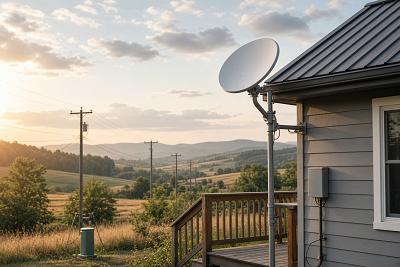
A LEO system places hundreds or thousands of small satellites in orbit relatively close to the Earth, and a dish at your home connects to whichever satellites are overhead, handing off as they move across the sky. Because the satellites are far closer than traditional ones, signals travel a much shorter distance, which is why latency is far lower than older satellite internet. The dish needs a clear view of the sky to maintain its connection.
This architecture is what makes LEO usable for activities that older satellite struggled with, like video calls and many online games. It also means coverage can reach almost anywhere with an open sky, including rural and remote areas where running fiber or cable is impractical, which is the core appeal of satellite.
How does it differ from older satellite?
Traditional satellite internet used satellites in a very high, distant orbit, so signals had to travel an enormous round trip, producing high latency that made real-time activities painful and could make even basic browsing feel slow. LEO's much lower orbit cuts that distance dramatically, so latency drops to levels that support video calls and gaming far better, and speeds are well into broadband territory.
The practical difference is night and day for responsiveness. If your impression of satellite internet comes from older systems, LEO is a different experience, though it still does not quite match the consistency of a good wired connection. Understanding this distinction helps set realistic expectations: much improved, but with its own characteristics.
| Aspect | Older satellite | LEO satellite |
|---|---|---|
| Orbit distance | Very high and distant | Much closer to Earth |
| Latency | High; poor for real-time use | Much lower; supports calls and gaming |
| Speeds | Limited | Broadband-level, varies |
| Best for | Basic connectivity only | Everyday use where wired is unavailable |
The table shows why LEO is treated as a real broadband option while older satellite was often a fallback. The orbit difference drives nearly all the improvement.
What are the trade-offs?
LEO satellite's strengths are availability and improved performance: it can reach homes that wired networks cannot, with speeds and latency good enough for everyday use. The trade-offs include performance that can vary with weather, sky obstructions like trees or buildings, and how many users share the network in your area. Latency, while vastly better than older satellite, is still typically higher and more variable than fiber or cable.
Cost and equipment are also considerations, since satellite involves a dish and equipment, and the service is generally priced as a premium option compared with widely available wired plans. For homes with good fiber or cable, those wired options usually remain the better value and performer; satellite's case is strongest where they are not available.
Which homes does LEO satellite fit?
LEO satellite fits best for rural and remote homes where fiber and cable are unavailable or unreliable, and for anyone who needs connectivity in hard-to-reach locations. It is also useful as a backup connection or for properties used part of the year where a wired install is impractical. For these households, LEO offers a level of service that was simply not possible with older satellite.
For homes that can get fiber or cable, those wired connections usually offer better consistency and value, so satellite is less compelling there. The honest summary is that LEO satellite is a strong option where wired internet falls short, and a competitive secondary choice elsewhere, with growing provider competition likely to keep improving the picture.
Frequently asked questions
What does LEO stand for?
Low earth orbit. LEO satellite internet uses satellites orbiting much closer to the Earth than traditional satellites, which reduces latency and makes the service usable for everyday activities like video calls.
Is LEO satellite as good as fiber?
Not quite. LEO is far better than older satellite and good for everyday use, but fiber generally offers lower, steadier latency and more consistent performance. Satellite's advantage is reaching places wired networks cannot.
Does weather affect LEO satellite internet?
It can. Heavy weather and obstructions like trees or buildings can affect the connection, since the dish needs a clear view of the sky. Performance can also vary with how many users share the network.
Who should consider LEO satellite?
Homes in rural or remote areas without good fiber or cable, properties in hard-to-reach locations, and those needing a backup or seasonal connection. Where wired options are strong, they usually remain the better value.
Bringing it together
LEO satellite internet uses constellations of satellites in a low orbit to deliver broadband-level speeds with far lower latency than older satellite, making it genuinely usable for everyday activities. Its strength is reaching homes that fiber and cable cannot, with trade-offs around weather, obstructions and variability. For rural and remote households it is a strong option, while homes with good wired service usually find fiber or cable the better fit, as provider competition continues to grow.